
The Complete Guide to Cooking Salt: Types of Salt, Uses & Choosing the Best Salt for Cooking

Updated: Sep 8
Introduction
Salt is one of the oldest and most essential ingredients found in kitchens across Australia and around the world. Although it may seem like a simple pantry staple, salt has played an extraordinary role throughout history from preserving food before refrigeration to enhancing the flavour of everyday meals.
What is Salt?
At its most basic, salt is a naturally occurring mineral composed primarily of sodium and chloride. These two elements combine naturally to form the crystals we recognise as common cooking salt. Over millions of years, salt has formed in different environments, including ancient underground deposits and evaporated seawater, creating a variety of salts with unique colours, crystal sizes and textures.

For thousands of years, civilisations have relied on salt for far more than seasoning food. It was once considered so valuable that it became a form of trade and even currency in some cultures. Long before modern refrigeration, salt helped preserve meat, fish and vegetables, allowing communities to safely store food for long periods before refrigeration existed.
Today, salt continues to be an essential ingredient in kitchens across Australia. While its primary purpose is to enhance flavour, it also plays an important role in baking, food preservation and cooking techniques. Salt can strengthen dough, balance sweetness in desserts, improve the texture of certain foods and help bring out the natural flavours of fresh ingredients.
Although many people think of salt as a single product, there are actually many different varieties available. Each type of salt has its own appearance, crystal structure and ideal culinary use. Some dissolve quickly into sauces and soups, while others provide a delicate crunch when sprinkled over a finished meal. Choosing the right salt often depends on the recipe, cooking method and personal preference.
Understanding these differences can help you get the most from every meal you prepare. Whether you're baking fresh bread, seasoning a steak for the barbecue or adding the finishing touch to a crisp garden salad, selecting the right salt can make a noticeable difference to both flavour and presentation.

In this guide, we'll explore the most common types of cooking salt available in Australia, explain how each one is produced, where it performs best in the kitchen and why Pink Himalayan Salt has become a popular choice for many Australian households.
Key Characteristics of Salt
Before comparing the different varieties, it helps to understand why salt has remained an essential kitchen ingredient for thousands of years.
Naturally occurring mineral found in underground deposits and seawater.
Enhances flavour by bringing out the natural taste of food.
Essential for cooking across a wide range of recipes and cuisines.
Supports baking by strengthening dough and balancing sweetness.
Traditionally used to preserve food, particularly before refrigeration became common.
Available in many forms, including fine, coarse, rock shaped, flaked and crystalline textures.
Chosen for different purposes, depending on the recipe, cooking method and desired finish.
Why Are There So Many Different Types of Salt?
Walk down the supermarket aisle and you'll find shelves lined with table salt, sea salt, rock salt, kosher salt, flake salt, Celtic Sea Salt and Pink Himalayan Salt.
At first glance they may all appear similar, but each has been created by nature or harvested in a different way, giving it its own unique characteristics.

How Does Salt Texture Affect Cooking?
One of the biggest differences between cooking salts is their texture. The size and shape of each crystal can influence how the salt feels, dissolves and seasons your food.
Fine Salt
Fine salt has small, even crystals that dissolve quickly into cooking. It distributes evenly throughout recipes, making it ideal for baking, sauces, soups, dressings and everyday cooking where consistent seasoning is important and can be used for seasoning and finishing dishes.
Coarse Salt
Coarse salt has larger crystals that dissolve more slowly. It provides a satisfying crunch when used as a finishing salt and is commonly used in grinders, meat rubs and barbecue cooking.
Flake Salt
Flake salt has thin, delicate crystals that crumble easily between your fingers. It is prized by many chefs as a finishing salt because it adds a light, crisp texture and a subtle burst of flavour without overwhelming a dish.
Rock Salt
Rock salt consists of large, irregular crystals. It is generally not sprinkled directly onto food but is commonly used in salt grinders, salt crust cooking and other specialised culinary techniques.

Some salts are best suited to baking, others are preferred by professional chefs for seasoning meat, while some are chosen as a finishing salt because of their delicate texture or striking appearance. Understanding these differences helps you select the right salt for the right purpose, rather than assuming one variety is suitable for every dish.
Salt Type | Everyday Cooking | Baking | Seasoning | Salt Grinder | Finishing & Presentation | BBQ & Meat Rubs |
Table Salt | ✔ | ✔ | ✔ | ✖ | ✖ | ✖ |
Sea Salt | ✔ | ✔ | ✔ | ✔ (Coarse) | ✔ | ✔ |
Black Salt | ✔ | ✔ | ✔ | ✔ | ✔ | |
Flake Salt | ✖ | ✖ | ✔ | ✖ | ★ Excellent | ✔ |
Celtic Sea Salt | ✔ | ✔ | ✔ | ✖ | ✔ | ✔ |
Pink Himalayan Salt (Rock) | ✔ | ✖ | ✔ | ★ Excellent | ✔ | ✔ |
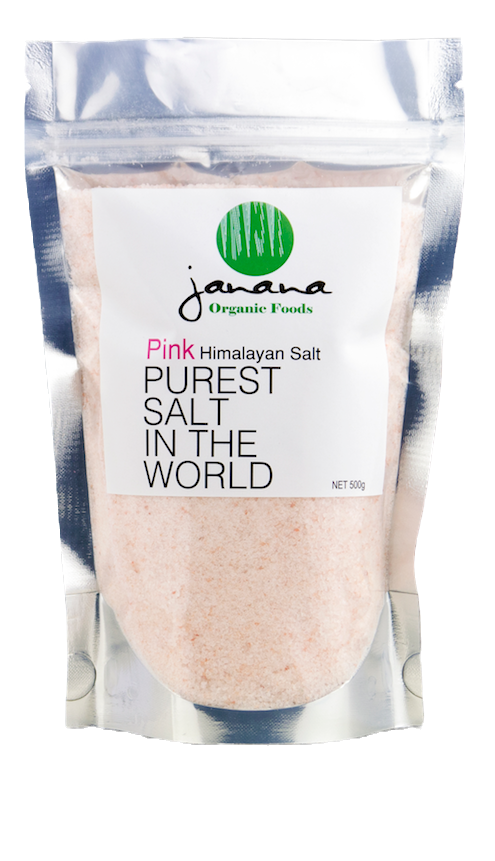
Janana Pink Himalayan Salt (Fine Grain) | ★ Excellent | ★ Excellent | ★ Excellent | Suitable for a Salt Shaker or Pinch Pots | ★ Excellent | ★ Excellent |
Why Choose Pink Himalayan Salt?
Among the many types of salt available today, Pink Himalayan Salt has become a popular choice for home cooks and professional chefs alike. It is valued for its natural origin, distinctive pale pink colour and clean, balanced flavour, making it a favourite among home cooks and professional chefs alike..
Himalayan Salt VS Table Salt
Unlike highly refined table salt, quality Pink Himalayan Salt contains no added anti-caking agents or artificial additives. It is simply mined, crushed or finely ground, graded by size and packaged, allowing it to retain its natural character.
Both Table salt and Janana Pink Himalayan Salt contains Magnesium, Iodine and other minerals suitable for special diets or health conditions but remember everything in moderation!
Choosing a fine grain Pink Himalayan Salt for everyday cooking removes the need to grind coarse salt before use. It pours easily from a salt shaker, dissolves quickly in cooking and is perfect for seasoning, baking, salads and everyday meals.
Why many people choose Pink Himalayan Salt
✔ Naturally sourced from ancient underground sea salt deposits.
✔ Minimal preparation with
no bleaching, anti-caking agents or artificial additives.
✔ Ready-to-use fine grain no grinder required.
✔ Mild, balanced flavour that compliments a wide variety of foods.
✔ Attractive pale pink colour that looks beautiful in the kitchen and on the table.
✔ Suitable for everyday cooking, baking, seasoning, BBQs and finishing dishes.
Why Australians Love Pink Himalayan Salt
Pink Himalayan Salt fits perfectly into the Australian lifestyle because we love:
Home cooking
Weekend BBQs
Fresh local produce
Artisan baking
Premium ingredients
Simple pantry staples
Why Choose Janana Organic Foods Pink Himalayan Salt?
At Janana Organic Foods, we specialise in fine grain Pink Himalayan Salt, making it ready to use straight from the pack. There's no need for a grinder—simply sprinkle it into your favourite recipes, season meats and vegetables, or keep it on the table in a salt shaker for everyday meals.
Our salt is naturally sourced, carefully selected, ground and packed to deliver a premium-quality product that brings both flavour and simplicity to your kitchen.
A Final Pinch of Advice
Whether you're baking fresh bread, seasoning a steak on the barbecue or preparing a crisp garden salad, choosing the right salt can make a surprising difference. Understanding the characteristics of each variety allows you to get the best flavour and results from every meal.
And remember, as with all seasonings, everything is best enjoyed in moderation.


Comments